The right storage facility protects your belongings, gives you reliable access, and charges a fair price for what it actually delivers. The wrong one costs you the same money but leaves your items exposed to theft, moisture damage, or a level of management that does not hold up under pressure. The difference is not always obvious from a website or a price comparison, which is why knowing what to actually evaluate matters before you sign anything.
This guide gives you a clear framework for assessing any storage facility, with specific questions to ask and red flags to watch for at each stage.
Start with What You Need, Not What Is Available
Most people approach storage facility selection backwards. They find a facility close to home, pick the cheapest available unit, and figure out the rest later. This is how you end up paying for a unit that is too small, storing furniture in a non-climate space through a humid West Virginia summer, or dealing with a facility that looked fine online but turns out to be poorly maintained.
Before you compare facilities, get clear on three things:
- What you are storing. Make a list. Furniture, electronics, documents, vehicles, tools, and seasonal equipment all have different requirements. Some need climate control. Some need height clearance. Some just need a dry, accessible space.
- How long you are storing it. A one-month move is different from a year of vehicle storage. Duration affects how important climate control, security depth, and facility maintenance actually are.
- How often you need access. If you are retrieving items weekly, access hours and location matter more. If you are storing long-term and rarely visiting, security and environmental protection take priority.
With those three answers in hand, you can evaluate any facility against your actual situation rather than picking based on price alone.
Seven Criteria That Separate Good Facilities from Average Ones
-
1Security depth and independence
Security is the most important factor and the one where facilities vary the most. A single camera and a padlock is not a security system. A genuinely secure facility uses multiple independent layers, so that a failure in one is covered by another.
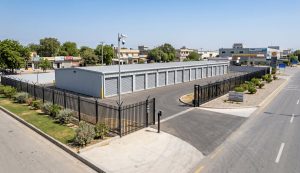
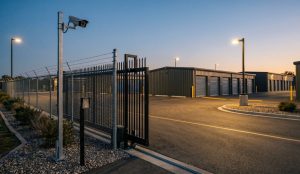
Look for: a fully fenced and gated perimeter, card-accessed entry at both the gate and the building entrance, 24-hour video surveillance inside and outside, and multiple independent alarm systems. At MOV Self Storage in Vienna, WV, these are named and operated independently as five separate layers, including triple alarm triggers with no single point of failure.
Ask: How many card-access checkpoints are there between the street and my unit? Are there multiple independent alarm systems, or a single one? How long is surveillance footage retained?
-
2Tenant screening
This is the security factor most people never think to ask about, and it is one of the most meaningful. The majority of theft at storage facilities involves current or former tenants misusing access they were granted, not outside break-ins that defeated the fence and cameras. Facilities that screen prospective tenants before rental remove the most common pathway for theft before it starts.
Most large chain facilities do not do this. It requires effort and occasionally means turning away a rental. Locally owned facilities run by accountable operators are far more likely to maintain it as a policy.
Ask: Do you screen tenants before granting access? What does that process involve?
-
3Climate control that actually controls climate
If you are storing anything sensitive to humidity or temperature, you need a genuine climate-controlled unit, not just one with air conditioning. The difference matters especially in West Virginia, where summer humidity is high and winter temperatures drop significantly. Heat and moisture cycle together to crack wood, corrode electronics, mold fabric, and deteriorate anything with an adhesive or rubber component.
A unit that controls temperature but not humidity still allows damaging moisture levels during peak summer months. Ask specifically whether the units regulate both, and whether the building is insulated. Climate-controlled storage at MOV Self Storage is heated, insulated, and staff-monitored, with humidity control that keeps WV’s seasonal conditions out of the unit entirely.
Ask: Do your climate-controlled units also regulate humidity? What temperature range do they maintain year-round? Is the building insulated?
-
4Access hours that match your schedule
Access hours vary widely. Some facilities offer 24-hour access. Others restrict it to business hours. Extended daily hours with a defined overnight closure, such as 6 a.m. to 10 p.m., is generally the right balance: accessible enough for any realistic need, with alarms set during the hours when unauthorized access is most likely to be attempted.
Consider whether office hours are separate from unit access hours. At a good facility, you can access your unit via key fob without needing staff present, and reach the owner or manager by phone if you have a problem outside of office hours.
Ask: What are the unit access hours versus office hours? Can I access my unit without staff being present? Is the owner reachable by phone on weekends?
-
5Unit size and ceiling height
Floor dimensions tell you part of the story. Ceiling height determines how much you can actually fit. The industry standard is 8 feet. MOV Self Storage uses 10-foot ceilings across all climate-controlled units, which is 20 percent more cubic space per unit. That difference means many customers fit comfortably into one size smaller than they expected, which often brings the actual monthly cost down despite the higher-quality unit.
For vehicle storage, ceiling height is not optional. An 8-foot ceiling cannot comfortably accommodate most cars. Units with 10-foot ceilings sized up to 11×20 accommodate antique cars and motorcycles properly. See the vehicle storage page for details on what fits.
Ask: What are the ceiling heights in your units? Do you have units sized for vehicle storage? Can I see the unit before I rent?
-
6Lease terms and payment flexibility
Month-to-month leases with no minimum term are the standard to expect from a trustworthy facility. Long-term contracts with early termination fees, automatic rate escalation clauses buried in the agreement, or mandatory insurance add-ons you did not agree to are all signs of a facility that is optimizing its revenue at the customer’s expense.
Read the rental agreement before signing. Confirm whether rate increases require advance notice, how much notice you need to give before vacating, and what payment methods are accepted. At MOV Self Storage, all rentals are month-to-month with no minimum term and no early exit penalty.
Ask: Is the rental month-to-month? Is there a minimum term? How much notice do I need to give before vacating? Can rates change, and how much notice do you give?
-
7Facility maintenance and cleanliness
How a facility looks when you visit tells you a great deal about how it is managed day-to-day. Clean common areas, functioning overhead lighting throughout, sealed unit doors with no visible gaps or rust, dry floors with no water staining, and year-round upkeep including winter snow removal are all indicators of a facility that takes its responsibilities seriously.
A facility that lets maintenance slip is also a facility where alarms may go unchecked, pest problems go unreported, and tenant concerns go unaddressed. Cleanliness and management quality are almost always correlated.
Ask: How often is the facility inspected? Who handles maintenance, and how quickly are issues resolved?
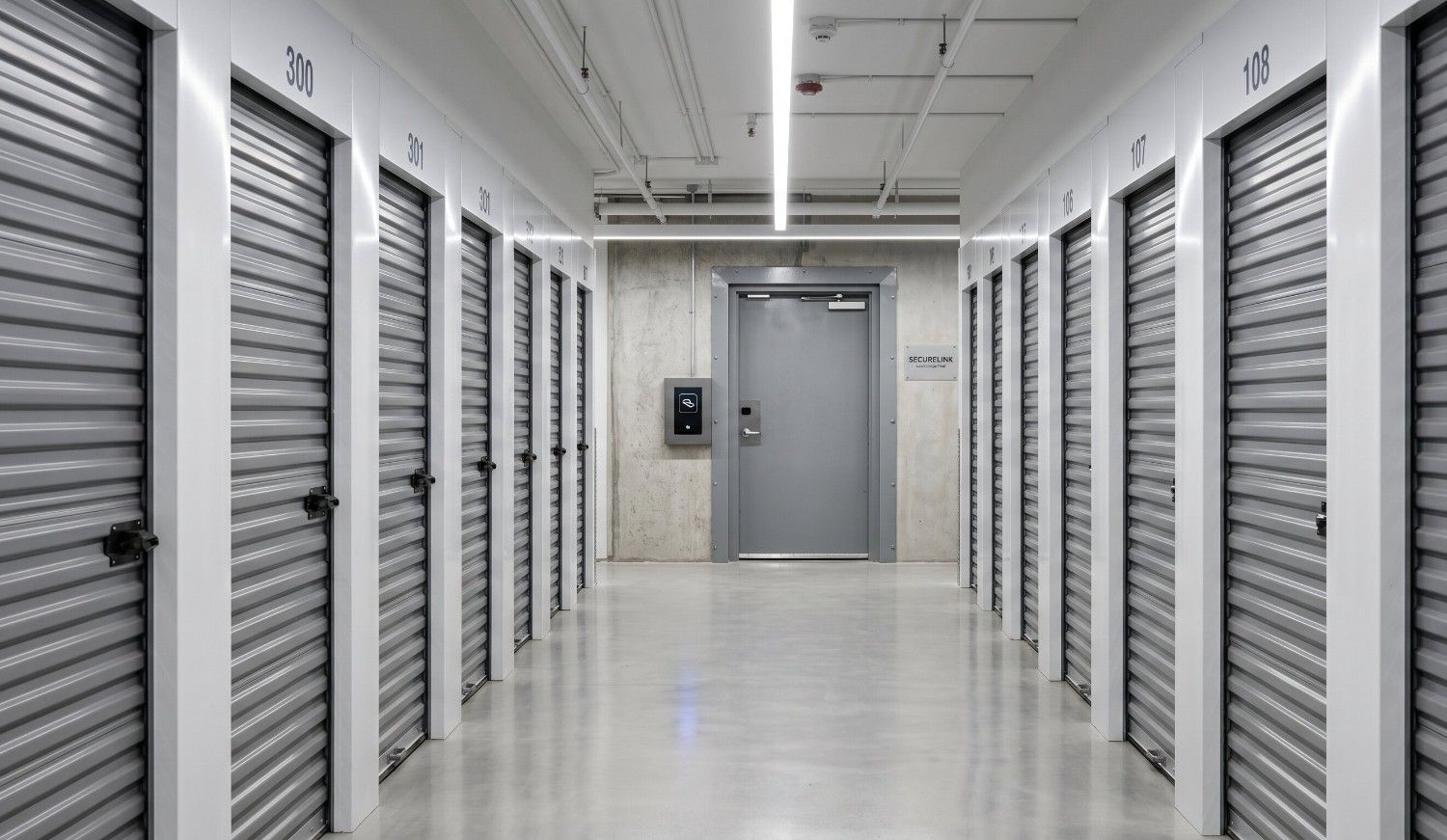
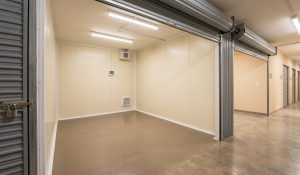
A clean, well-lit corridor with a card-access building entrance is a practical signal of how a facility is managed overall. Both indicate active investment in security and upkeep.
Why You Should Visit in Person Before Renting
A facility’s website tells you what it wants you to know. A visit in person tells you what is actually true. Online photos are typically taken on the best day the facility ever looked, from the most flattering angle available. The actual condition of the unit you would rent, the real lighting situation at 7 a.m. in winter, and the attitude of whoever answers your questions are not visible from a website.
Visit before committing. During the visit, pay attention to:
- Whether the facility is clean and well-maintained throughout, not just in the area near the office
- Whether all areas are adequately lit, including corners, stairwells if applicable, and the space around your specific unit
- Whether unit doors seal properly, with no visible rust, warping, or gaps at the base
- Whether there are any signs of moisture, staining, or mold in the common areas or units
- Whether pest traps or droppings are visible anywhere
- Whether the gate and building access systems are functioning and require personal credentials
- Whether the staff or owner you meet is knowledgeable and direct when answering your questions
If a facility resists letting you see the actual unit you would rent before you sign, that is a reason not to rent there. A confident operator has nothing to hide and will show you anything you ask to see.
Questions to Ask Before Signing
Most people sign storage agreements without asking much beyond the price and the size. These questions get you the information that actually determines whether a facility is worth renting from.
| Question | What a good answer looks like | What a poor answer looks like |
|---|---|---|
| Do you screen tenants before renting? | Yes, every applicant is screened before access is granted | No screening, or vague answer about it |
| How many card-access points are between the street and my unit? | At least two: gate and building entrance | Just a gate, or a shared code rather than personal access |
| Are there multiple independent alarm systems? | Yes, multiple triggers with no single point of failure | One alarm system, or uncertainty about what is in place |
| Do climate units control humidity as well as temperature? | Yes, both temperature and humidity are regulated year-round | Only temperature is controlled, or an unclear answer |
| What are the ceiling heights? | 10 feet or more, clearly stated | 8 feet standard, or the staff does not know |
| Is the rental month-to-month with no minimum term? | Yes, no minimum, leave when you are ready | Minimum term required, or early exit fee applies |
| Can rates increase, and how much notice do you give? | Yes, with stated advance notice (typically 30 days) | Rates can change at any time with little or no notice |
| Who do I contact if I have a problem? | The owner directly, with a real phone number | A call center, a ticketing system, or no clear answer |
Red Flags That Should Stop You from Renting
Some things you observe during a visit or a conversation with staff are not minor concerns. They are meaningful signals about how a facility operates and what you should expect as a tenant.
- Hesitation to show you the specific unit before you sign. A confident facility shows you exactly what you are renting.
- Shared gate codes rather than individual access cards. Shared codes cannot be traced to an individual. If something happens, there is no access record. Individual card or key fob entry is the standard to expect.
- Visible water staining, rust, or moisture on unit doors or floors. These indicate either a maintenance problem or a water intrusion issue that management has not addressed.
- Unattended or full pest traps in visible areas. This means pest monitoring exists but follow-up does not. Active pest management requires response, not just monitoring.
- Poorly lit or dark areas anywhere in the facility. Lighting is inexpensive to maintain. Neglected lighting means something else is also being neglected.
- No clear answer on who to call with a problem. If staff cannot give you a direct name and number for the owner or manager, accountability is diffuse and your problem may not get resolved.
- Pressure to sign quickly or to commit to a longer term for a lower price. A good facility does not need to pressure anyone. Month-to-month pricing should be the default, not a premium you pay for flexibility.
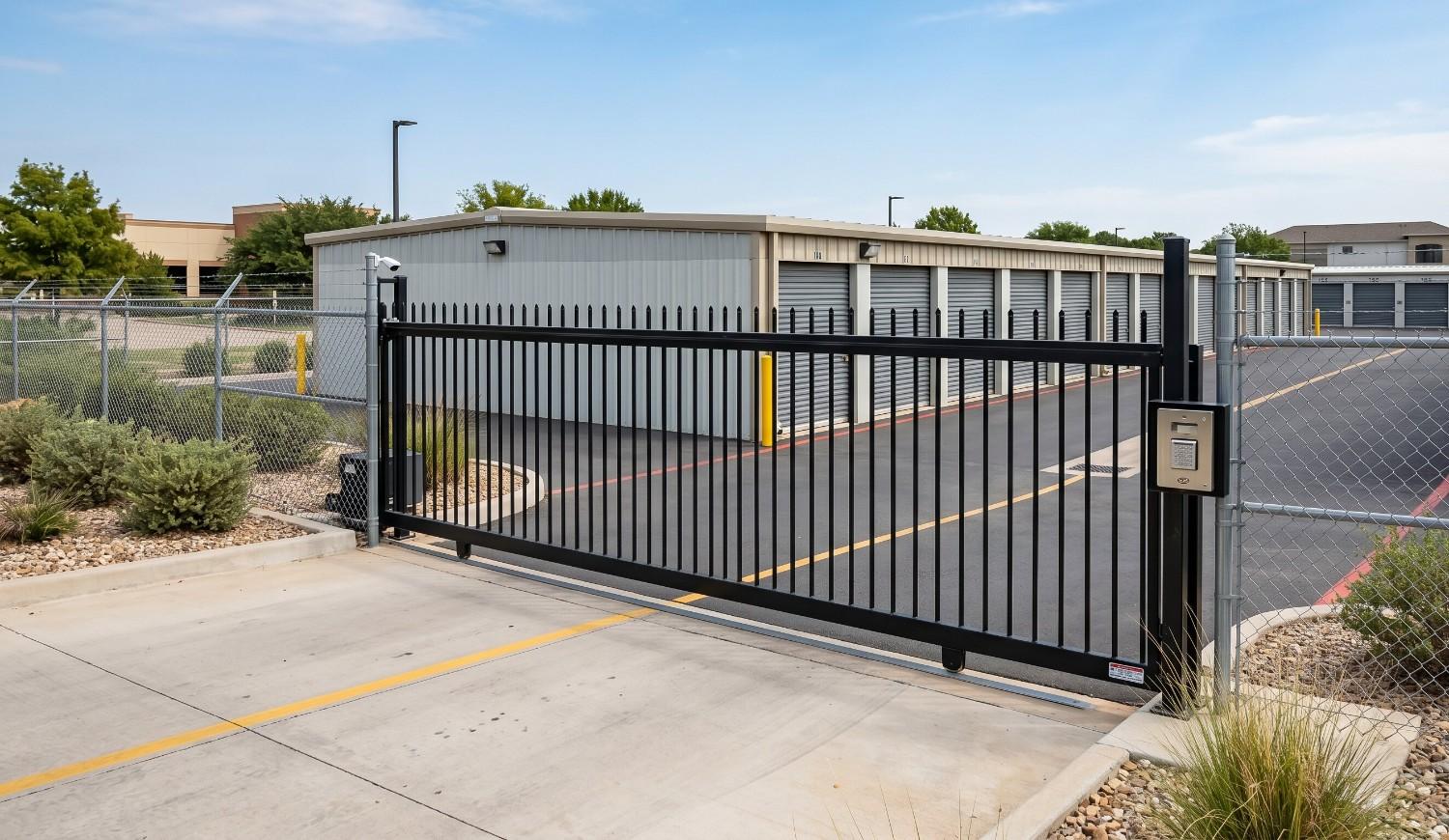
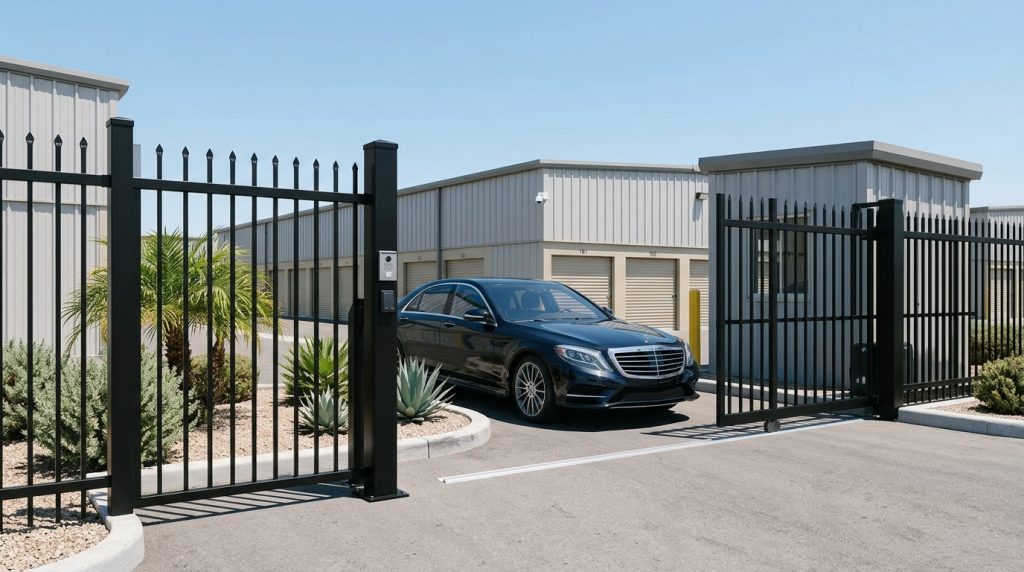
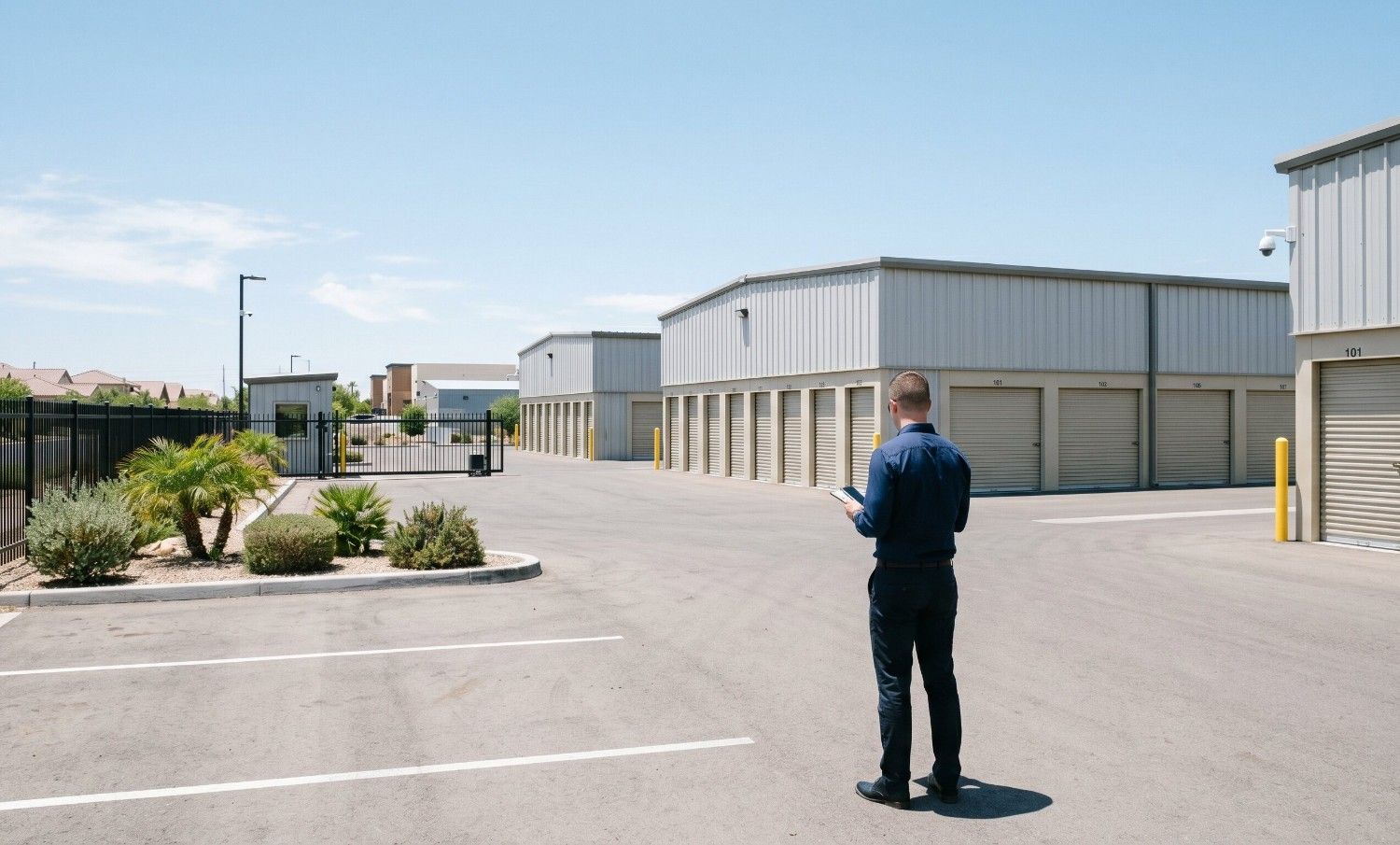
A fully fenced perimeter with a card-accessed motorized gate is the minimum standard for a well-secured facility. Individual access credentials are more secure than shared gate codes.
Understanding Cost Versus Value
Price is not the same as value in self storage. The cheapest unit at a poorly maintained facility with inadequate security can cost far more in the long run than a higher-priced unit at a facility that actually protects your belongings.
A few ways the calculation is often misread:
Floor space versus cubic feet
Two facilities advertising a 10×10 unit are not necessarily offering the same space. At 8-foot ceilings, that unit holds 800 cubic feet. At 10-foot ceilings, it holds 1,000. If you are comparing prices between facilities, compare cubic feet, not floor dimensions. A more expensive unit with taller ceilings may actually allow you to rent one size smaller and spend less overall.
Climate versus non-climate for sensitive items
A standard unit is cheaper per month. If you are storing furniture, electronics, antiques, or documents in a standard unit through a WV summer, the cost of humidity damage to those items will likely exceed whatever you saved on rent. Climate control is not a luxury for sensitive belongings in this region. It is the cheaper option when you account for what you are actually protecting.
Hidden fees and contract terms
Some facilities advertise a low introductory rate and raise it after the first month. Others bundle mandatory insurance or administrative fees that are not visible in the headline price. Read the rental agreement before signing. Ask specifically whether the quoted rate is the ongoing rate and whether there are any additional fees.
Locally Owned Versus Chain Facilities
Both can be good. The question is accountability and how problems get resolved when they arise.
At a large national chain, the person you interact with at the facility is typically not the decision-maker for anything beyond routine transactions. If something goes wrong, you may contact a call center, submit a ticket, or wait for a regional manager to respond. The process can be slow and impersonal.
At a locally owned facility, the owner is directly reachable, often by personal phone number. Decisions get made faster. There is one person accountable to the community served by that facility. That accountability tends to produce higher standards of maintenance, more direct communication, and a tenant relationship that feels different from a large corporate storage company.
MOV Self Storage has been locally owned and operated since 2019. The owner answers the phone directly and is reachable on weekends when available. No ticketing system, no hold queue, no regional manager between you and a real answer.
Frequently Asked Questions
Security, specifically the depth and independence of the security systems in place. A fenced perimeter alone is not adequate. A well-secured facility uses multiple independent layers: card-accessed entry at the gate and again at the building, 24-hour camera coverage, multiple alarm triggers, and, ideally, tenant screening before access is granted. Each layer operates separately so that a gap in one is covered by another.
Not necessarily. Price should be evaluated against what the unit actually provides: ceiling height, security layers, climate control, facility maintenance quality, and management accountability. A lower-priced unit at a poorly maintained or undersecured facility can cost you significantly more in damaged or stolen belongings. Compare value, not just monthly rate.
Make a list of what you plan to store and look up the cubic footage you need, not just the floor space. If the facility has 10-foot ceilings, you can often fit into one size smaller than you expect. When in doubt, call the facility and describe what you are storing. A knowledgeable owner or manager will give you a direct recommendation rather than upselling you to the largest available unit.
For any item affected by humidity or temperature, yes. West Virginia summers are humid, winters are cold, and the seasonal swing between the two is significant. Wood warps, fabric molds, electronics corrode, and paper deteriorates in those conditions over months in a non-climate unit. The cost difference between a standard and climate-controlled unit is small relative to the replacement cost of damaged furniture, electronics, or antiques.
Cleanliness throughout, not just near the office. Adequate lighting in all areas including the space around your specific unit. Properly sealing unit doors with no rust or gaps at the base. No visible water staining or moisture on floors and walls. No sign of unaddressed pest issues. A functioning card-access system that requires personal credentials, not shared codes. And staff or an owner who answers your questions directly and confidently.
At large chain facilities, promotional pricing is often available for new renters and can sometimes be requested. At locally owned facilities, pricing tends to be straightforward and published. What matters more than negotiating is making sure you understand exactly what the quoted price includes, whether the rate is subject to increases, how much notice is given before a rate change, and whether any fees are not visible in the headline price.
It depends on how often you need access. If you are visiting weekly to retrieve or rotate items, proximity matters. If you are storing long-term and rarely visiting, security and climate control matter more than a five-minute difference in drive time. MOV Self Storage on Grand Central Ave in Vienna serves customers from Parkersburg, Williamstown, Belpre, and Marietta, Ohio, who drive past closer chain options specifically because the facility’s security, climate control, and management quality make the distance worthwhile.
See How MOV Self Storage Measures Up
Five independent security layers. Tenant screening before access. Climate-controlled units with 10-foot ceilings. Month-to-month rental with no contract. Locally owned since 2019 in Vienna, WV, serving Wood County and the Mid-Ohio Valley.
Check Availability and Ask Us Anything