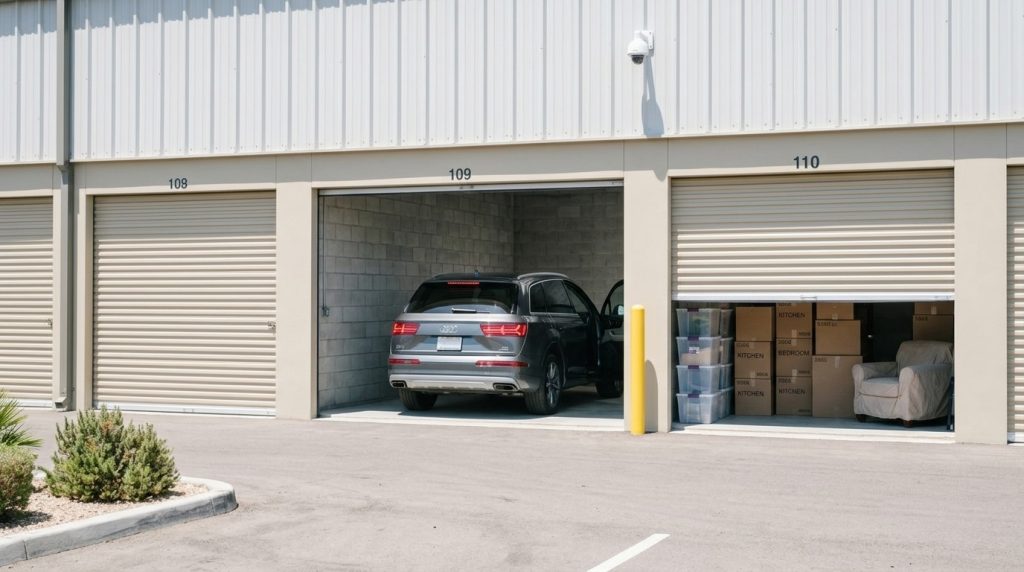
Self storage is a service that lets you rent a private, secure unit at a storage facility to keep your belongings outside your home or business. You move your items in yourself, access them on your own schedule during facility hours, and rent month-to-month with no long-term commitment. You stay in control of what you store, how it is organized, and when you come and go.
It is one of the most practical and flexible options available when you need more space, whether you are moving, downsizing, renovating, running a small business, or simply storing things you do not have room for right now.
How Self Storage Works
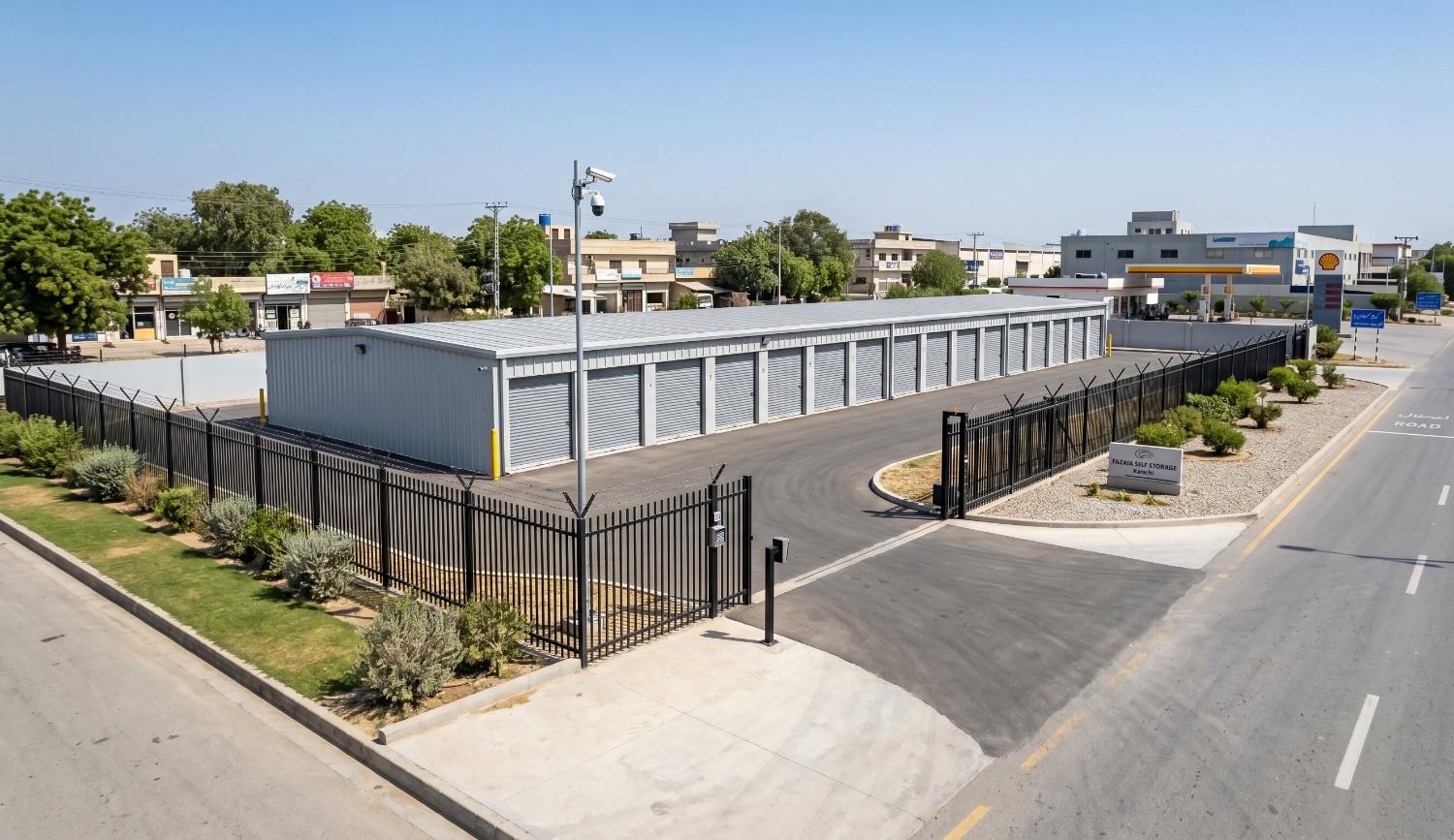
The process is simple. You choose a unit size, sign a rental agreement, pay your first month, and move your items in. After that, you access the unit during facility hours using your key fob or access card, add or remove items as needed, and pay monthly. When you no longer need the space, you empty the unit and end the rental. There is no penalty and no minimum term at a month-to-month facility.
The facility provides the space and the security. You provide the lock, the contents, and your own organization. That is the “self” in self storage: you manage your unit rather than handing your belongings over to someone else to warehouse for you.
-
Choose your unit size and type Decide how much space you need and whether you need climate control. Most facilities offer a range from small 5×5 closet-sized units up to large 10×30 or larger spaces for full household contents.
-
Sign a rental agreement Month-to-month agreements are standard. You agree to the facility’s terms, confirm what is and is not allowed, and set up payment. At MOV Self Storage, a tenant screening step happens here before access is granted.
-
Receive your access credentials You get a key fob, access card, or gate code. Some facilities use a combination. This is what lets you in during access hours without needing staff present.
-
Move your items in You bring your own boxes, furniture, equipment, or vehicle. Load and arrange the unit yourself. You bring your own lock for the unit door.
-
Access any time within facility hours Most facilities offer extended daily access hours. At MOV Self Storage, that is 6 a.m. to 10 p.m. every day. You come and go as often as you need.
-
End the rental when you are done Remove your belongings, return your access credentials if required, and end the rental. No long-term penalties, no exit fees.
Types of Self Storage Units
Not all storage units are the same. The two most common types have different features, price points, and ideal use cases.
Climate-controlled units
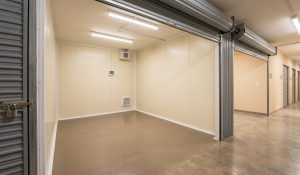
These units are housed inside an insulated building and maintain a regulated temperature and humidity level year-round, typically between 55 and 85 degrees Fahrenheit. They protect your belongings from heat, cold, and moisture. This matters most in regions with significant humidity or temperature swings, like West Virginia, where a summer in a non-climate unit can permanently damage wood, fabric, electronics, and documents. Climate-controlled storage is the right choice for furniture, antiques, vehicles, electronics, business records, artwork, and anything with real financial or sentimental value.
Standard drive-up units
These are exterior-facing units you drive directly up to. There is no temperature or humidity regulation. They are better suited for items that can tolerate outdoor-range conditions: tools, lawn equipment, contractor supplies, seasonal gear, and general household items that are not sensitive to climate. They tend to be less expensive than climate-controlled units and offer the convenience of pulling your vehicle right to the door.
Vehicle storage
Some facilities, including MOV Self Storage in Vienna, WV, offer units specifically suited for cars, motorcycles, and other vehicles. The key requirements are a large enough footprint and sufficient ceiling height. Standard 8-foot ceilings cannot accommodate many vehicles at a comfortable height or with easy access. Units with 10-foot ceilings, like those at MOV, fit antique cars and motorcycles with room to work around them. Climate control is strongly recommended for any vehicle being stored longer than a few weeks.
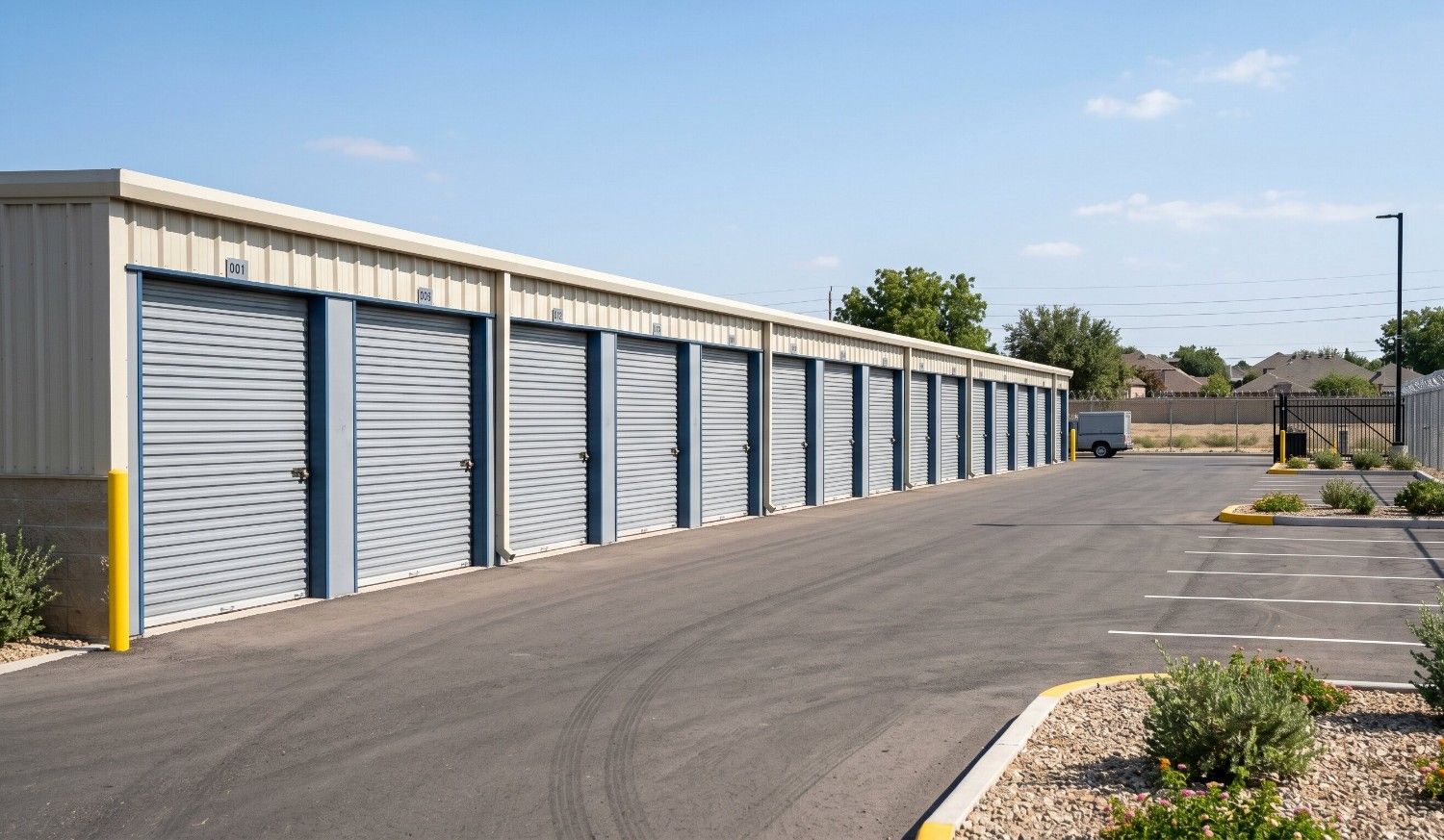
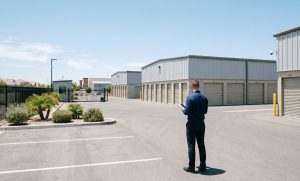
Standard drive-up units offer direct vehicle access to the door, making them practical for frequent loading and unloading of tools, equipment, and non-climate-sensitive items.
Unit Sizes and What Fits
Storage unit sizes are measured in square feet of floor space, but cubic feet, determined by ceiling height, is what actually determines how much you can fit. At MOV Self Storage, all climate-controlled units have 10-foot ceilings, which is 2 feet taller than the 8-foot industry standard. That 20 percent increase in cubic space means many customers fit comfortably into one size smaller than they expected.
| Unit Size | Type | Price/mo | Good For |
|---|---|---|---|
| 6×9 | Climate | $73 | Boxes, small items, seasonal storage, office contents |
| 7×11 | Climate | $94 | Studio apartment, small bedroom set, filing and records |
| 8×11 | Climate | $100 | One-bedroom apartment, office contents, appliances |
| 9×12 | Climate | $120 | Two to three-bedroom home, large furniture sets |
| 11×20 | Climate | $180 | Full household, antique car, motorcycle, large collections |
| 8×20 | Drive-Up | $110 | Tools, equipment, seasonal items, contractor supplies |
When estimating size, think cubic feet, not floor space. A 9×12 unit with 10-foot ceilings holds 1,080 cubic feet. The same footprint at 8-foot ceilings holds 864. That difference can mean stacking taller and fitting into a smaller, less expensive unit.
Who Uses Self Storage and Why
Self storage is used by a wide range of people for a wide range of reasons. The common thread is a need for secure, flexible, temporary or ongoing space that home or business premises cannot provide.
A storage unit bridges the gap between leaving one home and settling into another. It keeps belongings safe during the transition without rushing the move on either end.
Moving to a smaller home does not always mean getting rid of everything. Storage gives you time to decide what to keep, sell, or pass on without making permanent decisions under pressure.
Furniture, appliances, and valuables need to be out of the way during construction. A storage unit protects them from dust, paint, and damage while work is underway.
Off-site inventory, equipment, tools, and business records cost significantly less to store in a unit than in commercial retail space. Many Wood County businesses use storage for overflow and seasonal stock.
Antique cars and motorcycles need climate-controlled space that most garages do not provide. Storage protects them from humidity, temperature extremes, and deterioration between uses.
When a family member passes and a home needs to be cleared, storage gives the family time to sort, divide, and distribute belongings without rushing.
What to Look for in a Storage Facility
Not all storage facilities are equal in terms of security, maintenance, or management. Here is what to evaluate before signing a rental agreement.
Layered security, not just a fence
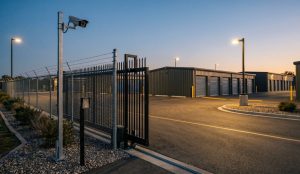
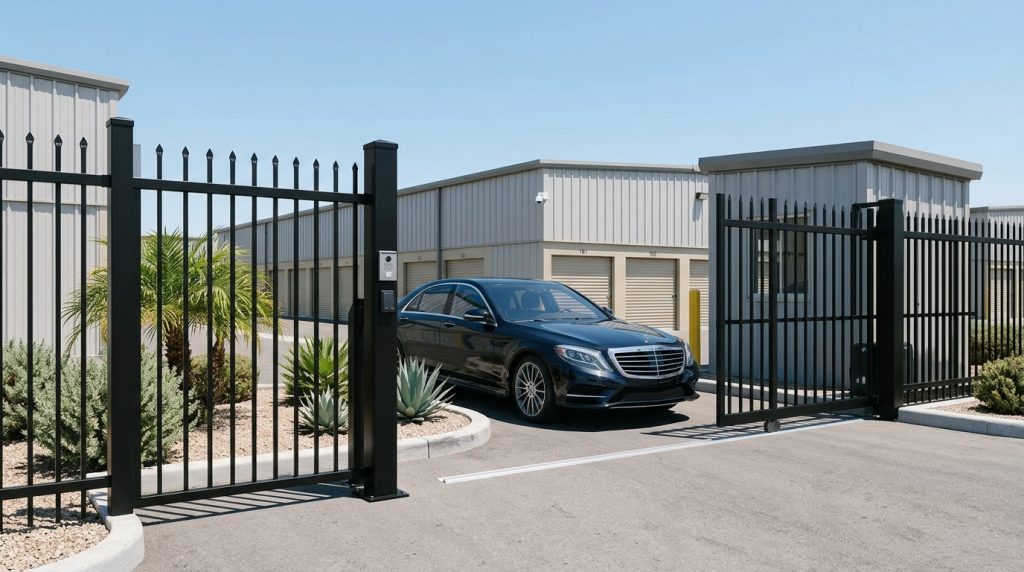
A fenced perimeter is the starting point, not the whole picture. A well-secured facility uses multiple independent systems: card-accessed gate entry, card-accessed building entry, 24-hour camera coverage inside and outside, and multiple independent alarm triggers. Each layer operates separately so that a gap in one is covered by another.
Tenant screening
Most theft at storage facilities involves current or former tenants misusing their access, not outside break-ins. Facilities that screen prospective tenants before granting access reduce this risk significantly. It is uncommon at large chain facilities but more likely at locally owned operations that are accountable to their community directly.
Climate control for the right items
If you are storing anything affected by humidity or temperature, confirm that the facility offers genuine climate-controlled units, not just air-cooled ones. In West Virginia, this matters for almost any item with real value. Ask specifically whether units regulate both temperature and humidity.
Defined access hours with overnight alarm
Facilities that lock down and set alarms during overnight hours are more secure than those offering 24-hour access. Unrestricted overnight access often means less controlled conditions during those hours. Unit access from 6 a.m. to 10 p.m. with alarms set overnight, as at MOV Self Storage, is the right balance of accessibility and security.
Active maintenance and cleanliness
A well-maintained facility tells you a lot about how management operates overall. Clean common areas, functioning lighting, sealed unit doors, and year-round upkeep including winter snow removal are all indicators of a facility that takes its responsibilities seriously.
Local ownership and direct accountability
At a locally owned facility, the owner is directly reachable, often by phone. There is no customer service queue, no ticketing system, and no regional manager between you and a decision. This matters when you have a question or a problem that needs a real answer quickly.
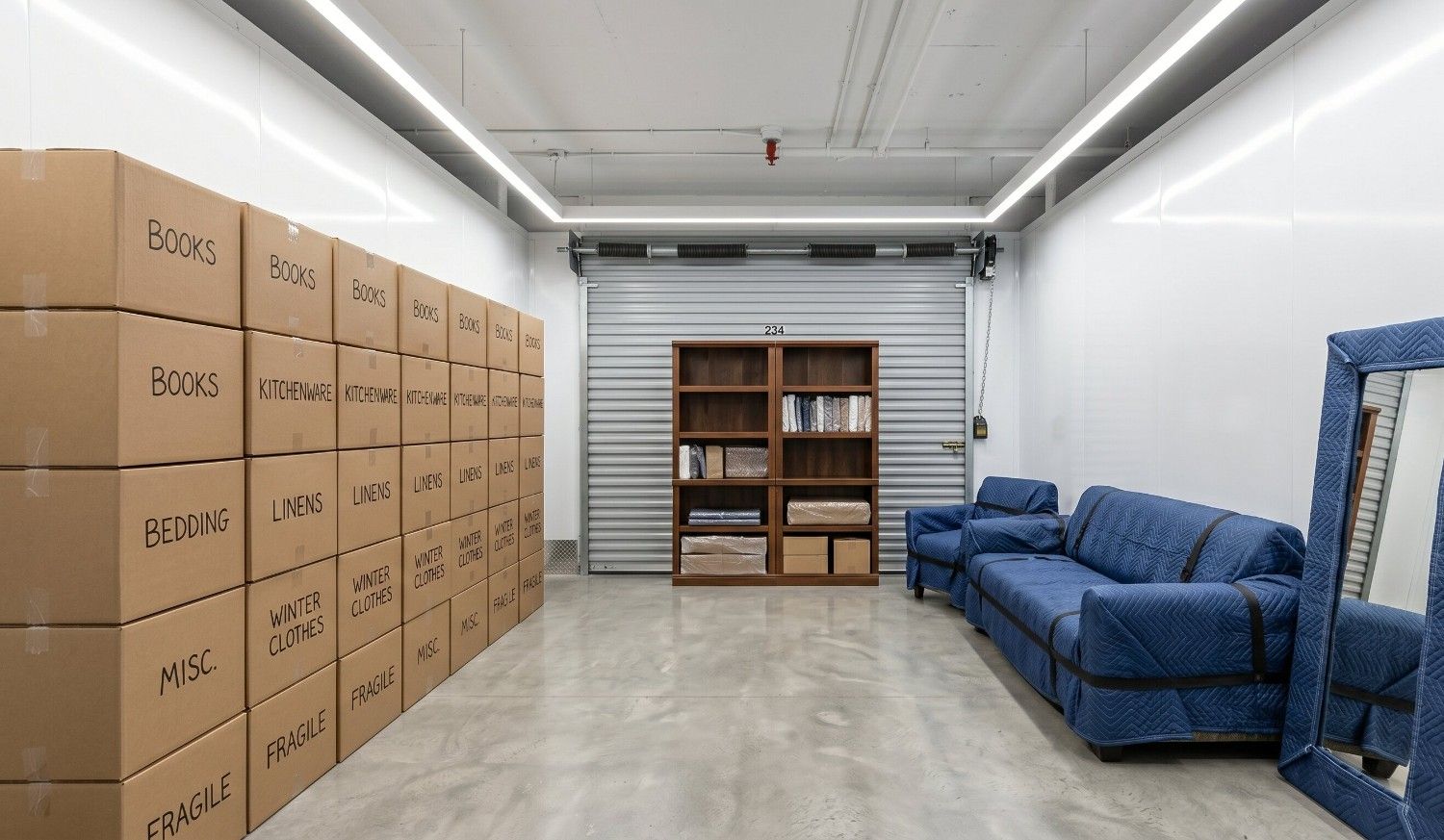
A well-organized unit makes retrieval easy and protects your belongings from damage. Heavy items on the floor, lighter boxes stacked on top, and frequently needed items near the front.
What You Cannot Store
Self storage facilities have prohibited items lists that exist for safety, legal, and liability reasons. These rules apply at every reputable facility and are not negotiable.
You cannot store:
- Perishable food or anything that will attract pests or produce odor
- Living plants or animals
- Flammable or combustible materials, including gasoline, propane, paint, and cleaning solvents
- Hazardous or toxic materials of any kind
- Firearms, ammunition, or explosives without specific authorization
- Stolen or illegal goods
- People. Storage units are commercial real property and cannot be used as living spaces.
If you are unsure whether a specific item is allowed, call the facility before you move anything in. A straightforward question gets a straightforward answer.
Self Storage in Vienna and the Mid-Ohio Valley
MOV Self Storage is located at 6347 Grand Central Ave in Vienna, West Virginia, and has been locally owned and operated since 2019. The facility serves Vienna, Parkersburg, Williamstown, and customers from across the river in Belpre and Marietta, Ohio.
Both unit types are available at one location: climate-controlled units from 6×9 up to 11×20, and standard 8×20 drive-up units. All climate units have 10-foot ceilings. Security runs five independent layers: triple alarm triggers, a fully fenced and gated perimeter, card-accessed gate entry, card-accessed building entry, and 24-hour video surveillance.
Every prospective tenant goes through a screening process before receiving access. That is not standard practice across the industry, and it matters for the quality of the tenant community sharing the facility with you.
Rentals are month-to-month with no long-term contract and no early exit fees. Unit access runs daily from 6 a.m. to 10 p.m. For vehicle storage questions, unit availability, or sizing help, the owner answers the phone directly at (681) 588-0138.
Frequently Asked Questions
With self storage, you rent a private unit and manage it yourself. You move your items in, organize them, access them, and move them out. The facility provides the space and security, nothing else. A warehouse typically involves a third party handling, storing, and retrieving your goods, usually at a higher cost and with less direct access. Self storage gives you full control and direct access to your unit at any time during facility hours.
At most facilities, including MOV Self Storage, rentals are month-to-month with no minimum term. You can rent for a single month during a move or store long-term for years. You pay for as long as you need the unit and leave when you are done. There are no penalties for ending the rental early.
Yes. Self storage is the name of the service and the industry. A storage unit is the individual rented space within a self storage facility. You may also hear the terms “storage space,” “storage locker,” or simply “unit,” all referring to the same thing.
Yes, in almost all cases. The facility provides the unit; you provide the padlock or disc lock for your unit door. A disc lock or a high-quality padlock with a shrouded shackle is harder to cut than a standard padlock and is worth the modest extra cost. Some facilities sell locks on-site. Call ahead to confirm what type is recommended.
Yes. Self storage is widely used by small businesses for off-site inventory, equipment, seasonal stock, tools, and document archiving. It costs significantly less than commercial retail or warehouse space and scales with your needs month-to-month. Many businesses in Vienna and Wood County use storage units rather than paying for larger premises.
Policies vary by facility but are outlined in your rental agreement. Most facilities charge a late fee after a grace period and will eventually restrict access or initiate a lien process if rent remains unpaid. Read your agreement carefully. At MOV Self Storage, payment is by credit card only, with online and in-person payment options available Monday through Friday.
It is worth checking. Your homeowner’s or renter’s insurance policy may extend some coverage to off-site stored belongings. Some storage facilities offer or require their own coverage. Even at a well-secured facility, insurance covers scenarios that physical security cannot, including fire, flooding, and natural events. Check your existing policy first, then ask the facility what they offer or recommend.
Ready to Rent a Unit in Vienna, WV?
MOV Self Storage offers climate-controlled and drive-up units on Grand Central Ave, with five-layer security, tenant screening, and 10-foot ceilings. Month-to-month only. Serving Vienna, Parkersburg, Williamstown, Belpre, and Marietta.
Check Availability and Pricing