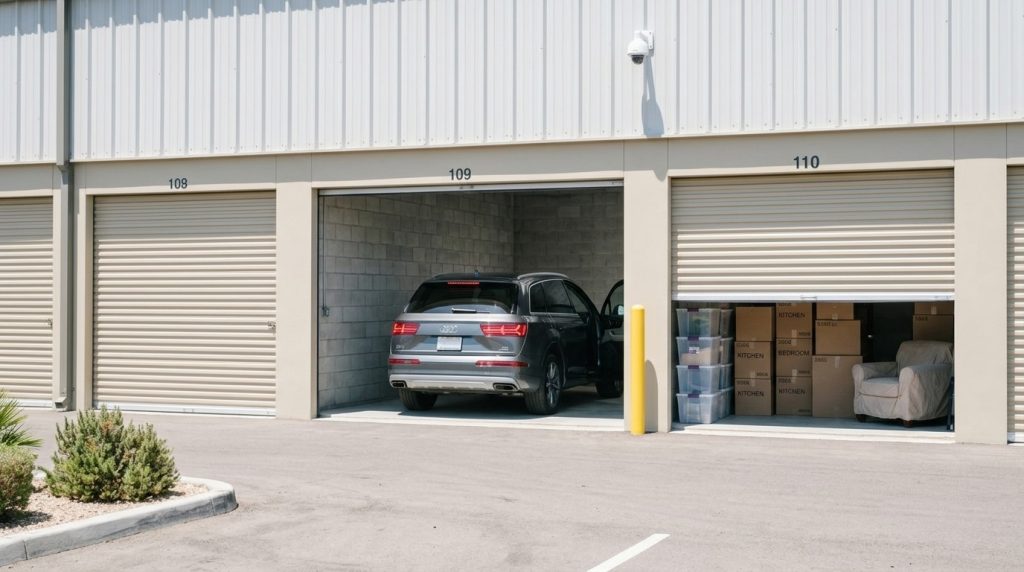
Yes, self storage units are safe when the facility is well-built, actively maintained, and run with real security procedures. The better answer, though, is that safety varies significantly from one facility to the next. Knowing what to look for tells you far more than a blanket yes or no.
This guide walks through how storage unit security actually works, what genuine risks exist, how climate affects your belongings, and what separates a well-managed facility from one that merely looks the part.
What Security Features Actually Matter
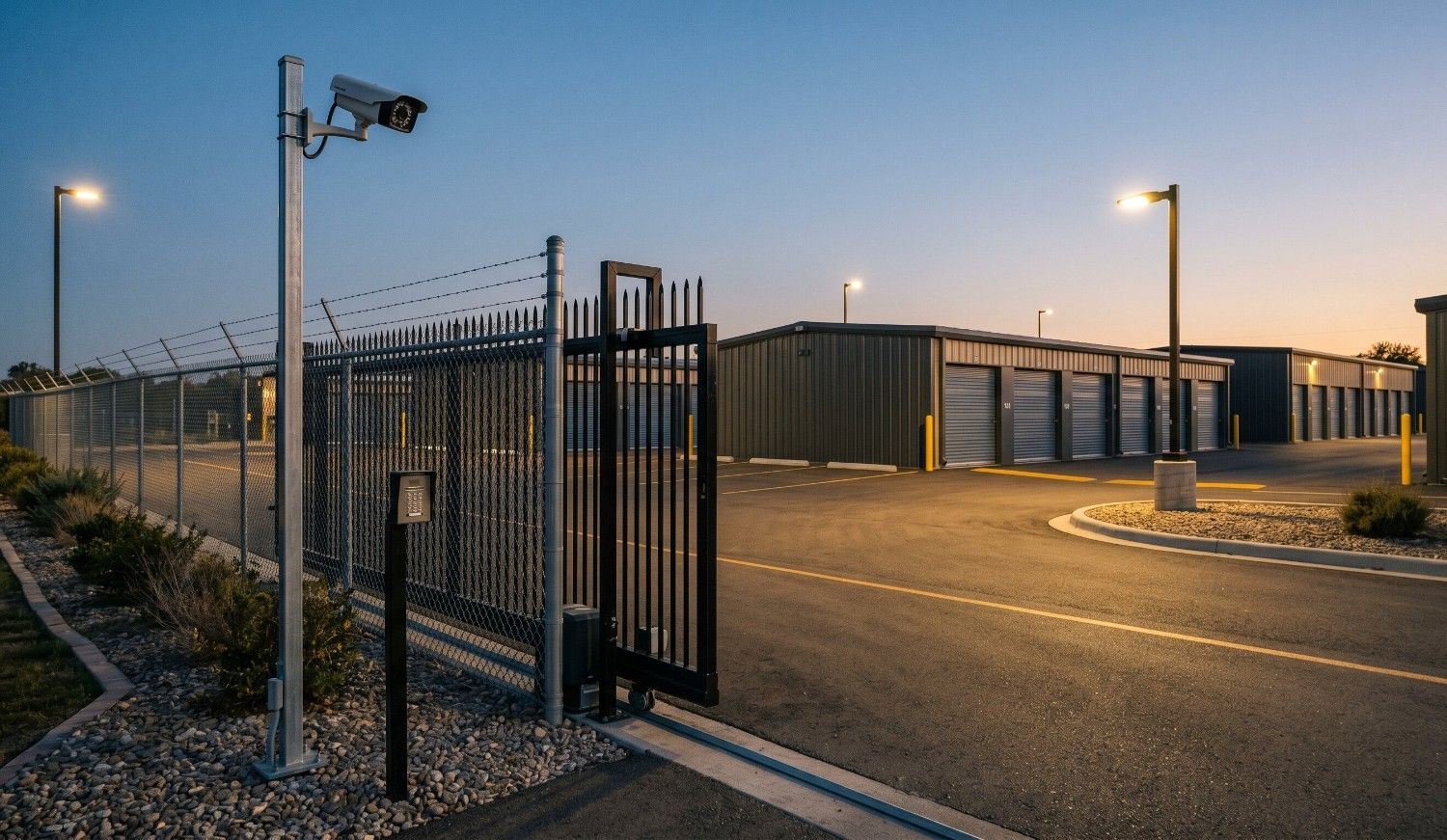
Security in self storage is not about one strong lock. The facilities that protect your belongings reliably use independent, overlapping layers, so that if one system has a gap, another one covers it.
Here is what a well-secured facility looks like in practice:
| Security Feature | What It Does | Why It Matters |
|---|---|---|
| Fenced and gated perimeter | Physically encloses the facility | Prevents unauthorized vehicles from reaching units |
| Card-accessed gate entry | Requires a personal key fob or access card at the gate | Creates a record of every entry; blocks tailgating |
| Card-accessed building entry | Second swipe required at the building door | A two-checkpoint system means gate access alone is not enough |
| 24-hour video surveillance | Cameras running continuously, interior and exterior | Deters crime and provides records if an incident occurs |
| Multiple alarm triggers | Independent alarm systems with no single point of failure | Redundancy means one disabled sensor does not leave you exposed |
| Defined access hours | Alarms set outside of access window (e.g., 6 a.m. to 10 p.m.) | No entry is permitted overnight; reduces after-hours risk |
At MOV Self Storage in Vienna, WV, these six layers are all present and operate independently. The gate, the building door, and the alarm systems are separate systems, not a single integrated product with a single point of failure.
A facility that talks about “state-of-the-art security” without naming specific features is often relying on the phrase itself. Ask directly: how many access points require a card? Are there multiple independent alarms?
Why Tenant Screening Matters as Much as Cameras
Most thefts at storage facilities are not break-ins from outside. They happen because someone who already had access, a current or former tenant, misused it. This is the security risk that cameras and fences do not address.
Tenant screening before rental changes that. When a facility checks who it rents to before granting access, it removes the most common pathway for theft: the person who was let in and should not have been.
This is a practice that most large chain storage facilities skip. It requires effort, and it occasionally means turning away a rental. Locally owned facilities are more likely to do it because the owner is accountable to the community directly. At MOV Self Storage, every prospective tenant is screened before receiving access, which helps maintain a vetted tenant community for everyone storing there.
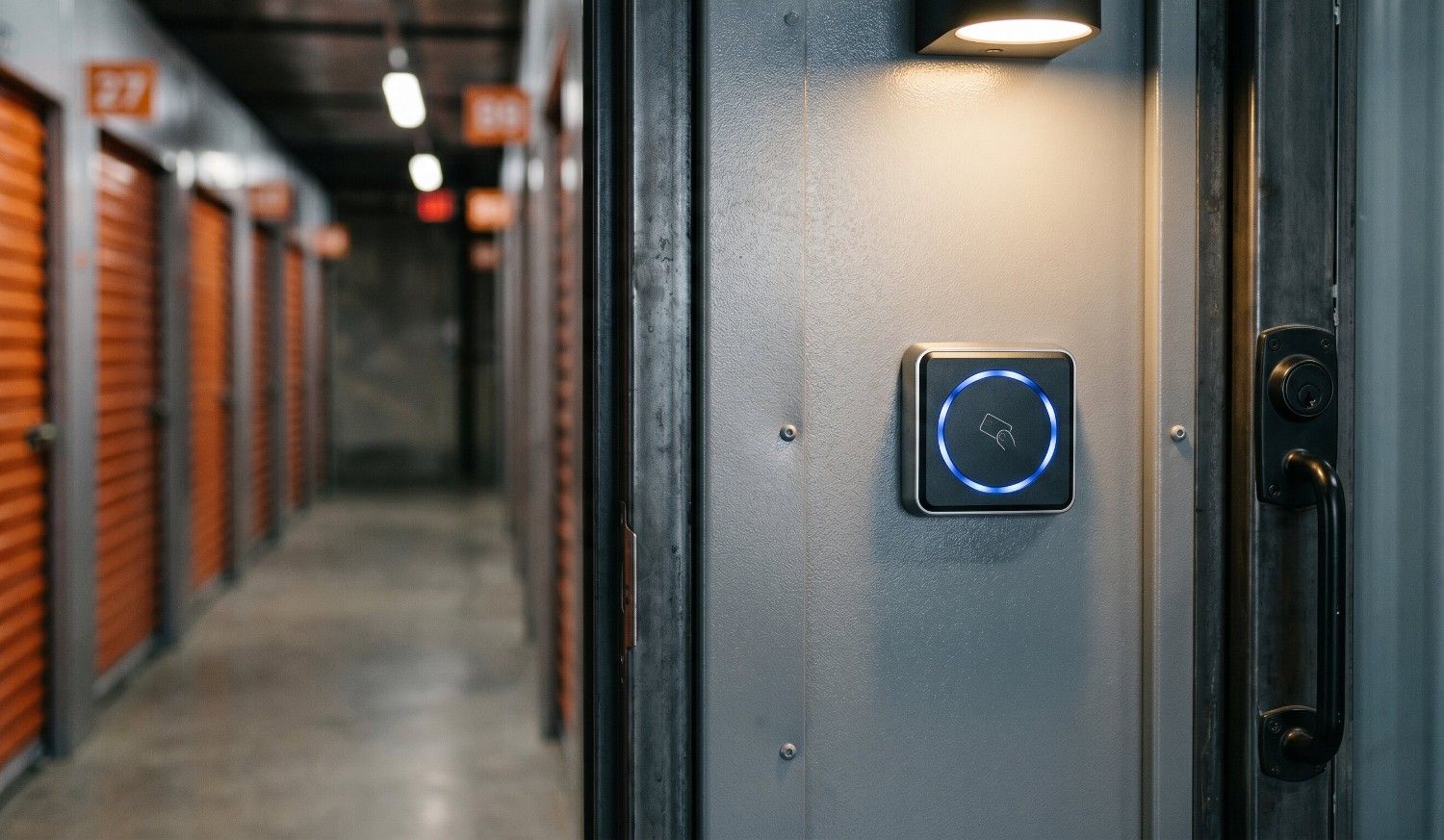
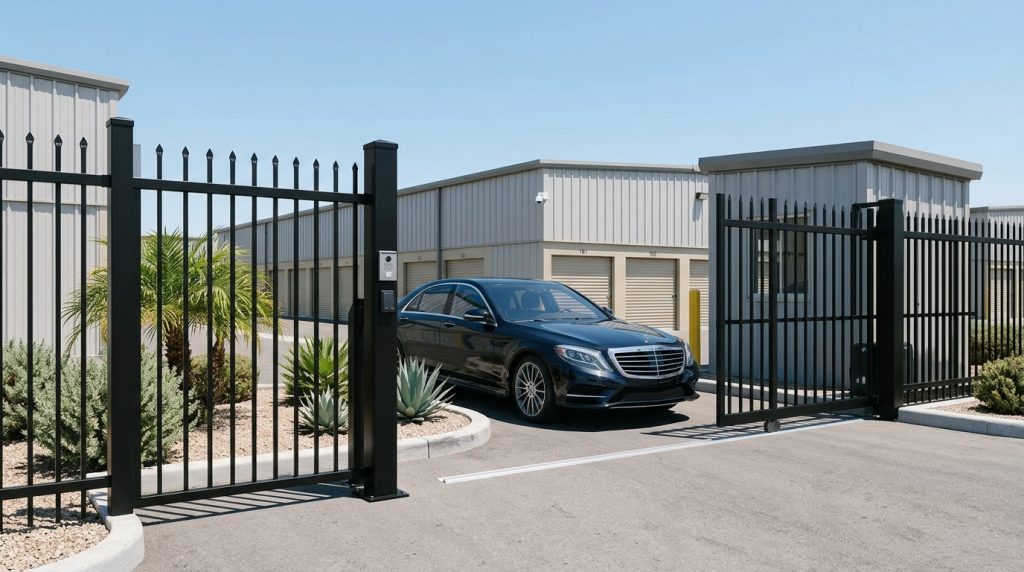
Card access at both the gate and building entrance means two separate checkpoints, not one.
Climate Control and Protecting Your Belongings
Physical security addresses theft and unauthorized entry. Climate control addresses a separate category of damage that is just as real: humidity, temperature swings, and moisture. In West Virginia, both matter.
WV summers are humid. Winters bring freezing temperatures. A non-climate unit stores your belongings in those conditions. Wood warps, fabric grows mold, electronics corrode, and paper yellows. For many items, this kind of damage is irreversible.
Climate-controlled storage units maintain a regulated temperature year-round. At MOV Self Storage, all climate units are heated, insulated, and staff-monitored Monday through Saturday. The humidity that makes WV storage risky for furniture, antiques, and documents stays out.
What benefits most from climate-controlled storage
- Wood furniture and upholstered pieces
- Electronics, appliances, and media
- Documents, photographs, and artwork
- Antique cars and motorcycles
- Musical instruments
- Clothing stored long-term
- Collectibles, antiques, and anything with sentimental or monetary value
For tools, seasonal equipment, and household goods that are not sensitive to temperature, a standard drive-up unit is a reasonable option. The key is matching the unit type to what you are actually storing.
Real Risks to Know About
No honest guide to storage unit safety glosses over the risks. They exist, and knowing them helps you make better decisions.
Theft
It happens at poorly secured facilities. The best protection is choosing a facility with genuine layered security and a screened tenant community, not just a padlock on your unit door. A good padlock is worth having, but it is the last line of defense, not the only one.
Water and mold damage
Facilities that do not invest in maintenance will eventually have moisture intrusion. Signs of a problem include musty smells, visible condensation, or staining near the floor. Climate-controlled units dramatically reduce this risk. If you are storing in a non-climate unit, use sealed plastic bins rather than cardboard boxes, and elevate items off the floor when possible.
Pests
Rodents and insects look for the same things in a storage unit that they look for anywhere: food, warmth, and shelter. A facility that is actively maintained, clean, and inspected regularly keeps this risk low. Do not store food or perishables in any unit. Check for signs of pest activity (droppings, nesting material, gnaw marks) before and after loading.
Fire
Reputable facilities have fire suppression systems and prohibit flammable items. Follow the facility rules: no gasoline, propane, paint, or other combustibles. Check that you can see sprinkler heads in the unit and corridor. Old wiring or crowded units full of flammable packing material are warning signs.
Unscreened neighbors
This goes back to tenant screening. Sharing a building with people who were not vetted is the overlooked risk. A facility that screens tenants before access removes most of this concern before it starts.
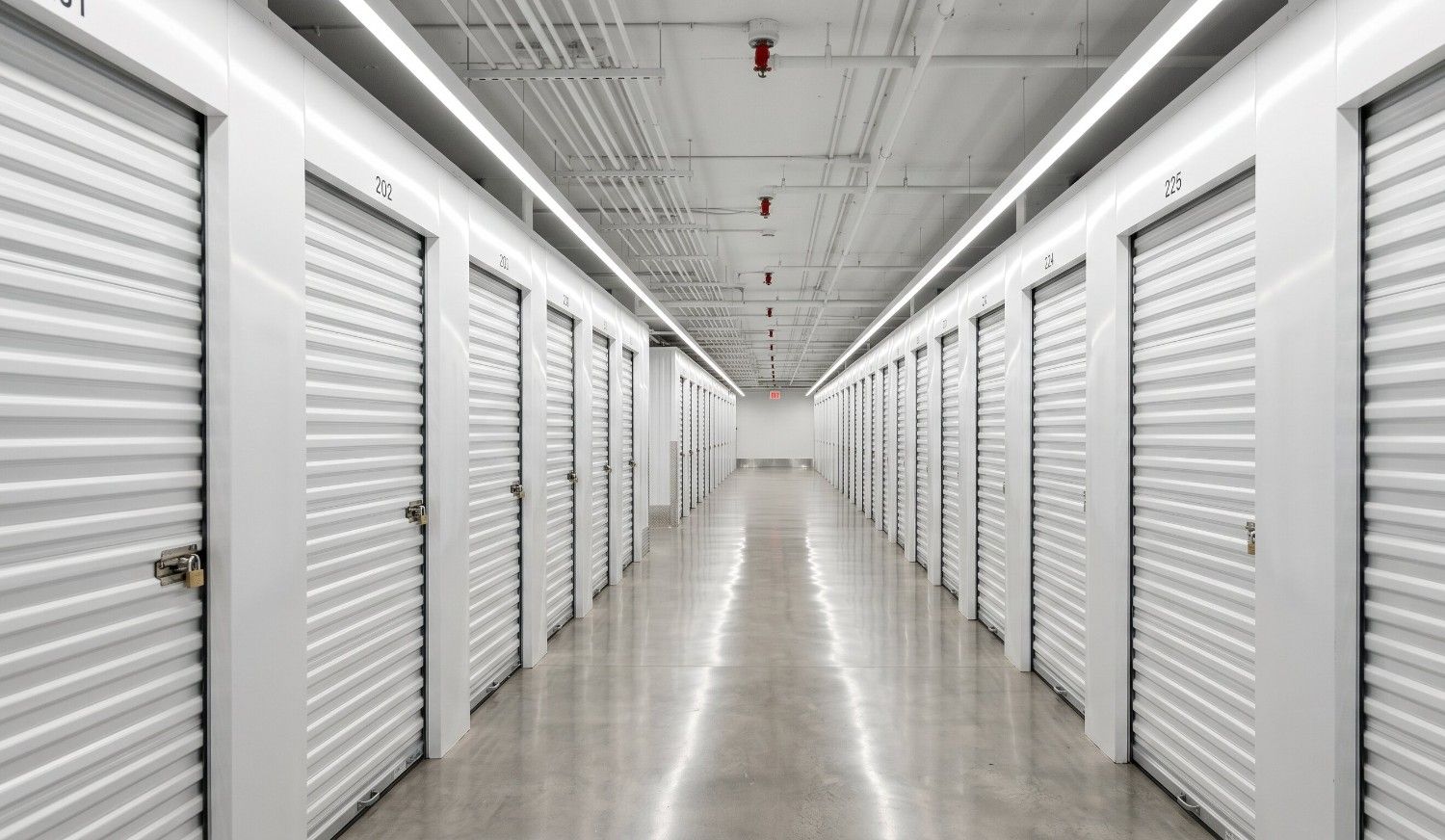
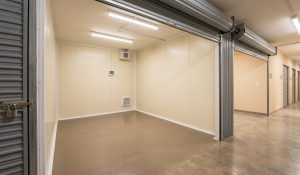
A clean, well-lit interior is a practical indicator of how a facility is managed overall.
What to Check Before Renting a Unit
The clearest way to evaluate whether a storage facility is actually safe is to look at what it does, not what it claims. Here is a practical checklist to use before signing anything.
- Is the perimeter fully fenced and gated? Unauthorized vehicles should not be able to reach the building at all.
- Does entry require a personal access card or key fob at multiple points? One card swipe is weaker than two independent checkpoints.
- Are there visible cameras covering all areas, including inside the building? Ask if they are monitored or recorded, and for how long footage is retained.
- Are there multiple independent alarm systems? A single alarm system has a single point of failure.
- Does the facility screen tenants before granting access? Most do not. The ones that do are worth noting.
- Is access restricted to defined hours, with alarms set overnight? 24-hour access may sound convenient but often means less secure conditions after midnight.
- Is the facility clean and well-maintained? Debris, water staining, pest traps left unattended, and broken lighting are all indicators of how seriously management takes upkeep.
- Are climate-controlled units available for temperature-sensitive items? In WV, this is not optional for furniture, electronics, or antiques.
Storage Unit vs. Storing at Home
Many people assume their garage or basement is safer than a storage unit because it is on their property. In practice, home storage has real vulnerabilities that a well-managed storage facility does not share.
Residential garages are among the easiest points of entry for burglars. A standard garage door can be opened in seconds without the access code. Attics and basements have no climate control and are frequently affected by moisture, pests, and temperature extremes. Your homeowner’s insurance may cover loss in these spaces, but the damage from humidity and pests often is not a covered event.
A properly secured, climate-controlled storage unit offers physical protections a residential garage simply cannot match: a fenced perimeter, two-factor access control, 24-hour surveillance, independent alarm systems, and regulated temperature. For anything you genuinely want to protect, a good storage facility is the safer option.
Frequently Asked Questions
At a well-secured facility, yes. Layered security (fenced perimeter, card-access gate and building entry, 24-hour cameras, multiple independent alarms) makes unauthorized access significantly harder. Tenant screening adds a second level of protection by limiting who gets access in the first place. Facilities without these measures carry more risk.
Perishable food, living plants or animals, flammable or hazardous materials (gasoline, propane, paint), and anything illegal. These items create fire, pest, and liability risks for you and everyone storing at the facility. Most facilities prohibit them explicitly.
If you are storing wood furniture, electronics, artwork, documents, antiques, vehicles, or anything that can be damaged by heat, cold, or humidity, then yes. In West Virginia especially, where summers are humid and winters are cold, a non-climate unit exposes sensitive items to real risk. For tools, seasonal outdoor equipment, and similar items, a standard drive-up unit is usually fine.
Yes, in the right unit. You need a climate-controlled unit large enough to fit the vehicle, with a ceiling height that clears the roof. At MOV Self Storage, the 11×20 climate units with 10-foot ceilings are specifically suited for antique cars and motorcycles. Climate control prevents corrosion, rubber degradation, and moisture damage over long storage periods. See the vehicle storage page for details.
It is not legally required, but it is one of the most effective ways to maintain a safe facility. Most of the theft that happens at storage facilities involves current or former tenants who misused their access. Screening before rental reduces that risk substantially. Many chain facilities skip this step. Locally owned facilities are more likely to do it.
It is worth checking. Your homeowner’s or renter’s insurance policy may extend some coverage to off-site stored property. Some storage facilities offer or require their own coverage. Even with strong physical security, no facility can guarantee zero risk, and insurance covers scenarios that physical measures cannot, including natural events. Check your existing policy first, then ask the facility what they offer.
Visit in person before renting. Look at the lighting (adequate throughout, no dark corners), the floors (clean and dry), the unit doors (sealing properly, no rust or gaps), and the common areas. Ask how often the facility is inspected. A locally owned operation where the owner is present and reachable is easier to hold accountable than a remote-managed chain.
Store with Confidence in Vienna, WV
MOV Self Storage on Grand Central Ave offers five-layer security, tenant screening, and climate-controlled units with 10-foot ceilings. Month-to-month, no long-term contract required. Serving Vienna, Parkersburg, Williamstown, Belpre, and Marietta.
Check Availability and Pricing